Old Clock Hall
The preserved 1893 main building houses the Council, archives, and public ceremonies; the earliest chronospatial laboratory remains beneath it.
Campus & city
UFM has no gated suburban campus. Buildings span several blocks of the New Vistula Academic District and connect through public streets, underground rail, rooftop bridges, and controlled maintenance tunnels.
Campus guide
Select a location for its purpose and access status. Restricted facilities do not publish precise coordinates or visitor routes.
The preserved 1893 main building houses the Council, archives, and public ceremonies; the earliest chronospatial laboratory remains beneath it.
A modern teaching and research tower whose upper floors host anomaly-observation arrays.
The assembly, calibration, structural-validation, and city-scale relocation zone for the chronospatial crane, jointly operated by Special Facilities and Civic Continuity.
A high-energy facility beneath the riverbed with layered field shielding, independent power, and emergency containment gates.
A network of bookshops, studios, cafés, club rooms, and late-night dining spaces at the heart of everyday campus life.
Spaces & facilities
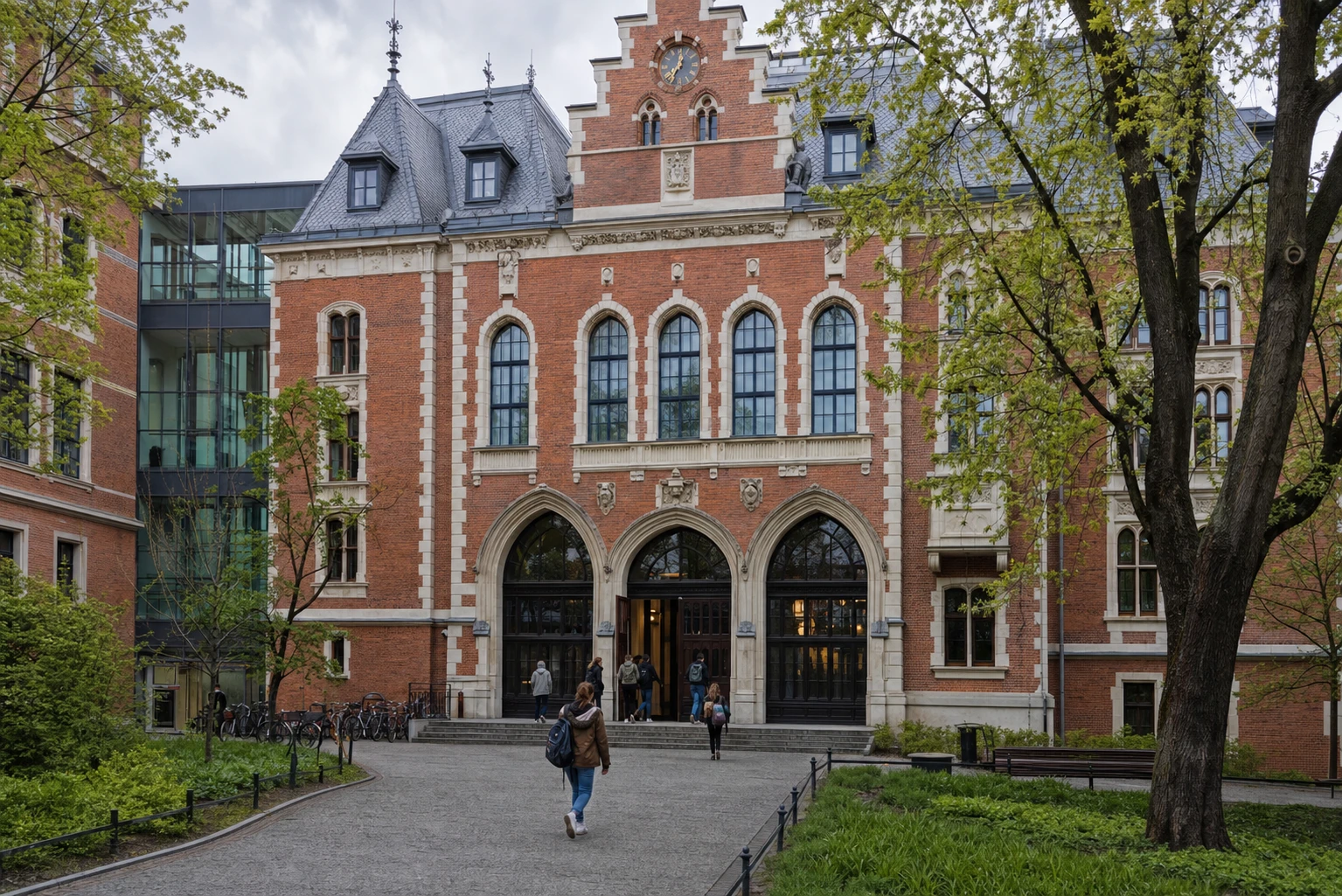
The preserved 1893 main building houses the Council, archives, and public ceremonies; the earliest chronospatial laboratory remains beneath it.
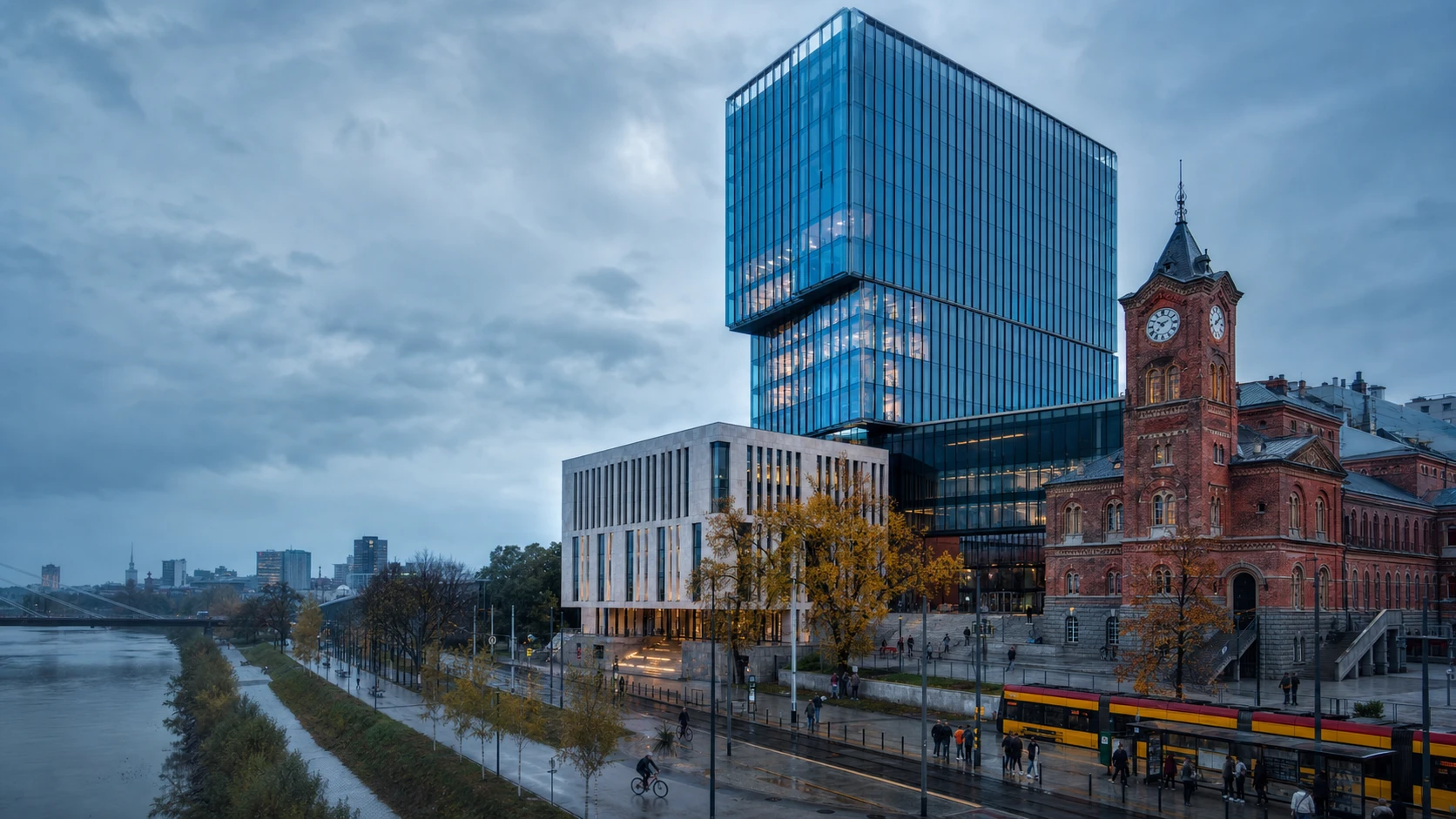
A modern teaching and research tower whose upper floors host anomaly-observation arrays.
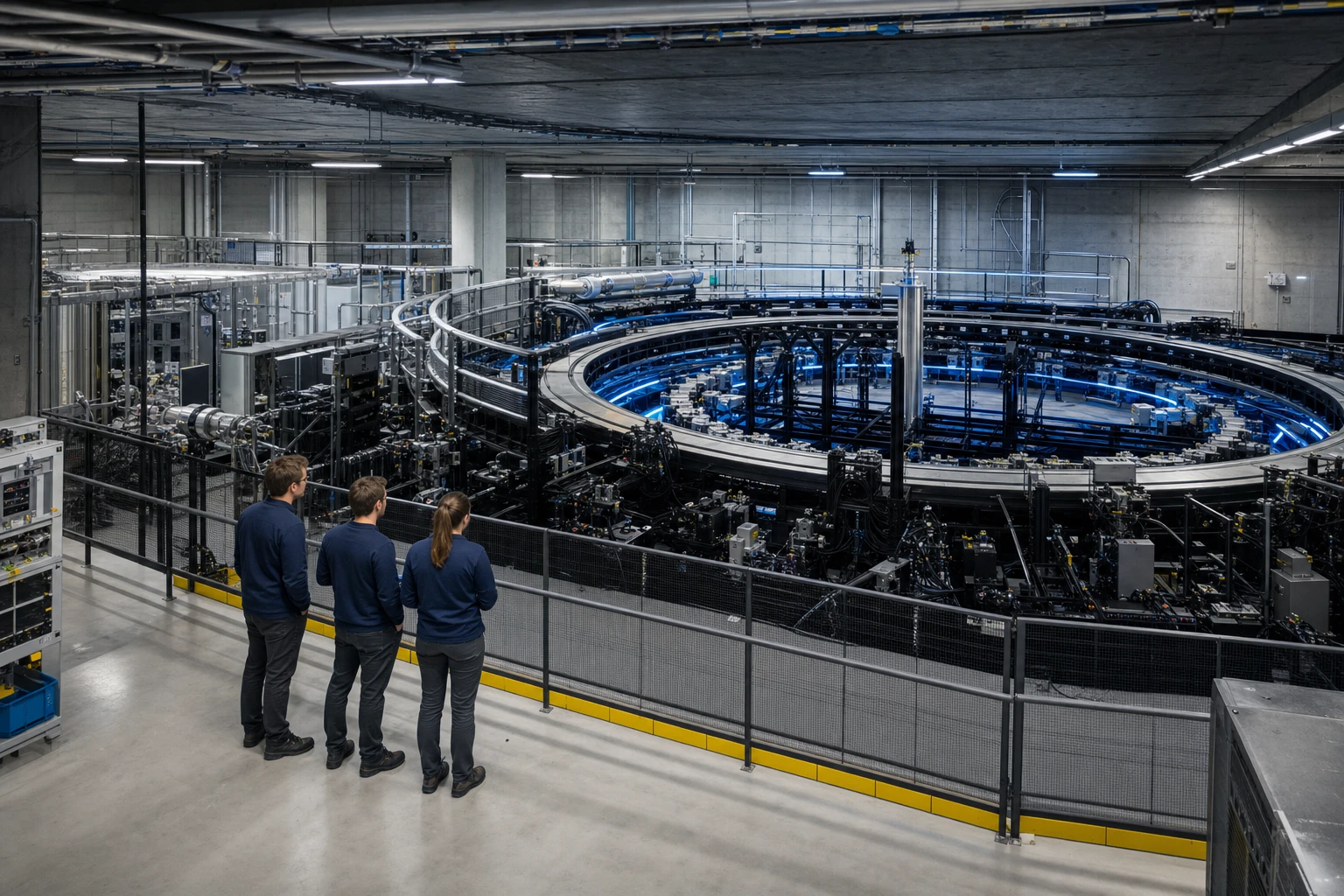
The assembly, calibration, structural-validation, and city-scale relocation zone for the chronospatial crane, jointly operated by Special Facilities and Civic Continuity.
A high-energy facility beneath the riverbed with layered field shielding, independent power, and emergency containment gates.
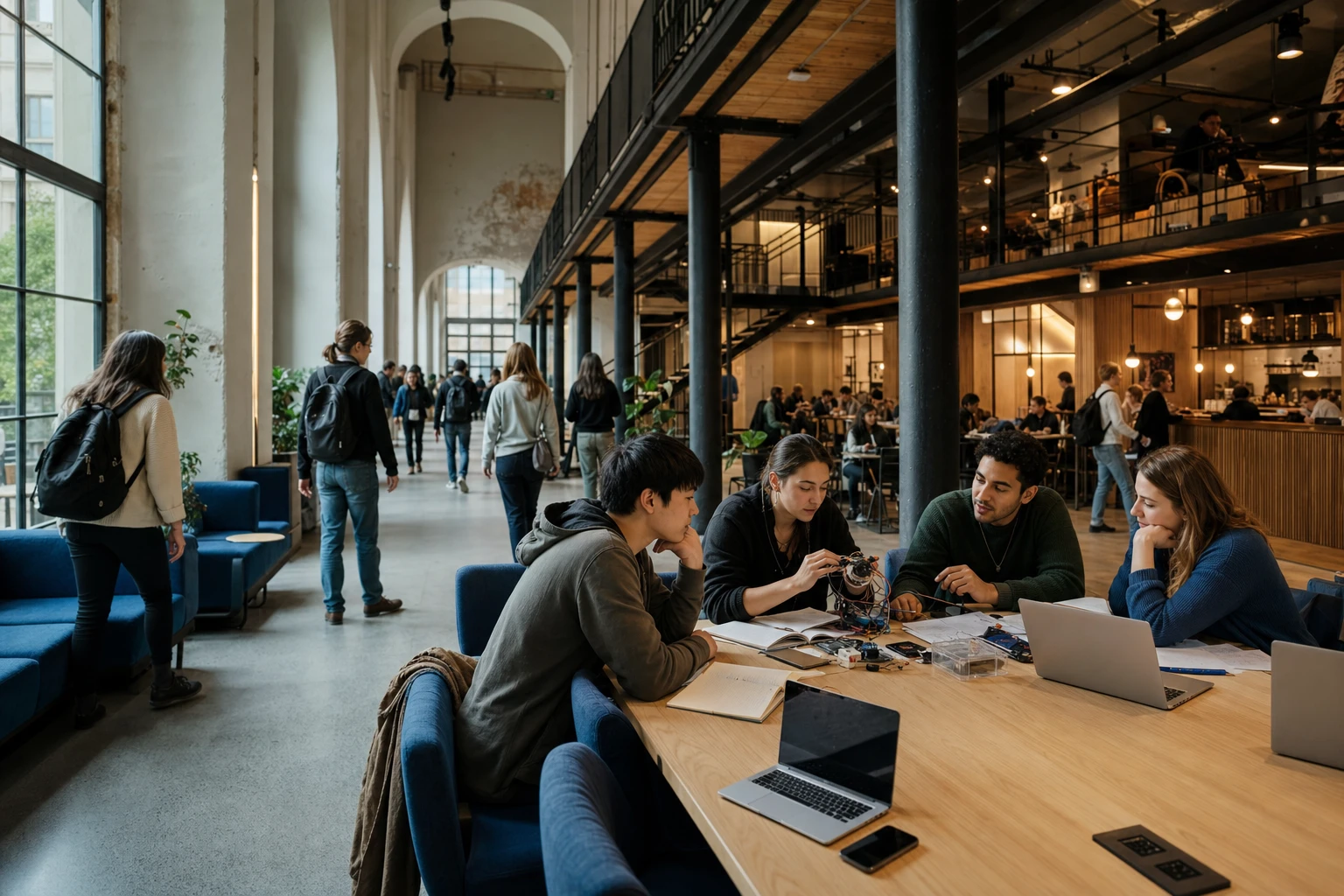
A network of bookshops, studios, cafés, club rooms, and late-night dining spaces at the heart of everyday campus life.
C01—C03 / Everyday campus systems
This is more than an account of buildings. It shows how students receive support, how campus resources are stewarded, and how an urban university operates from morning into the night. The three dimensions reveal the systems behind each place from the perspective of those who use it.
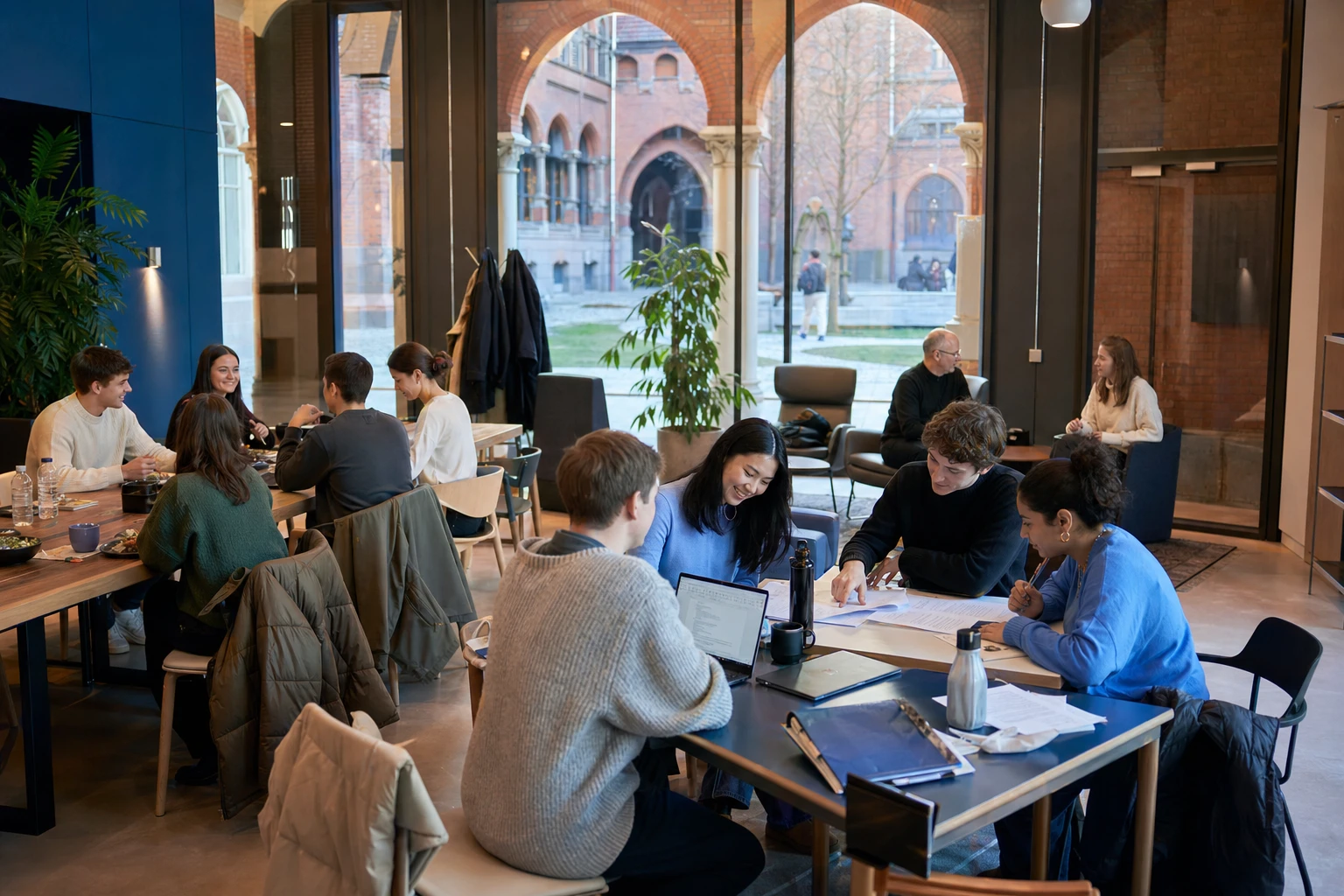
C01 / Student experience
Academic advising, wellbeing, international services, societies, careers, and alumni relations are connected by the Center for Student Development and academic departments, giving students consistent support through demanding study.
From entry and course choice to research decisions and graduation planning, students have a continuing advising route.
Wellbeing support, accessible-learning adjustments, and crisis referral are integrated into everyday campus operations.
Societies, volunteering, placements, employers, and alumni mentoring extend classroom learning into society.
Student life
The Student Arcades connect bookshops, studios, cafés, club rooms, and late-night dining. Advising, careers, volunteering, and campus culture become part of daily life here.
C02 / Campus stewardship
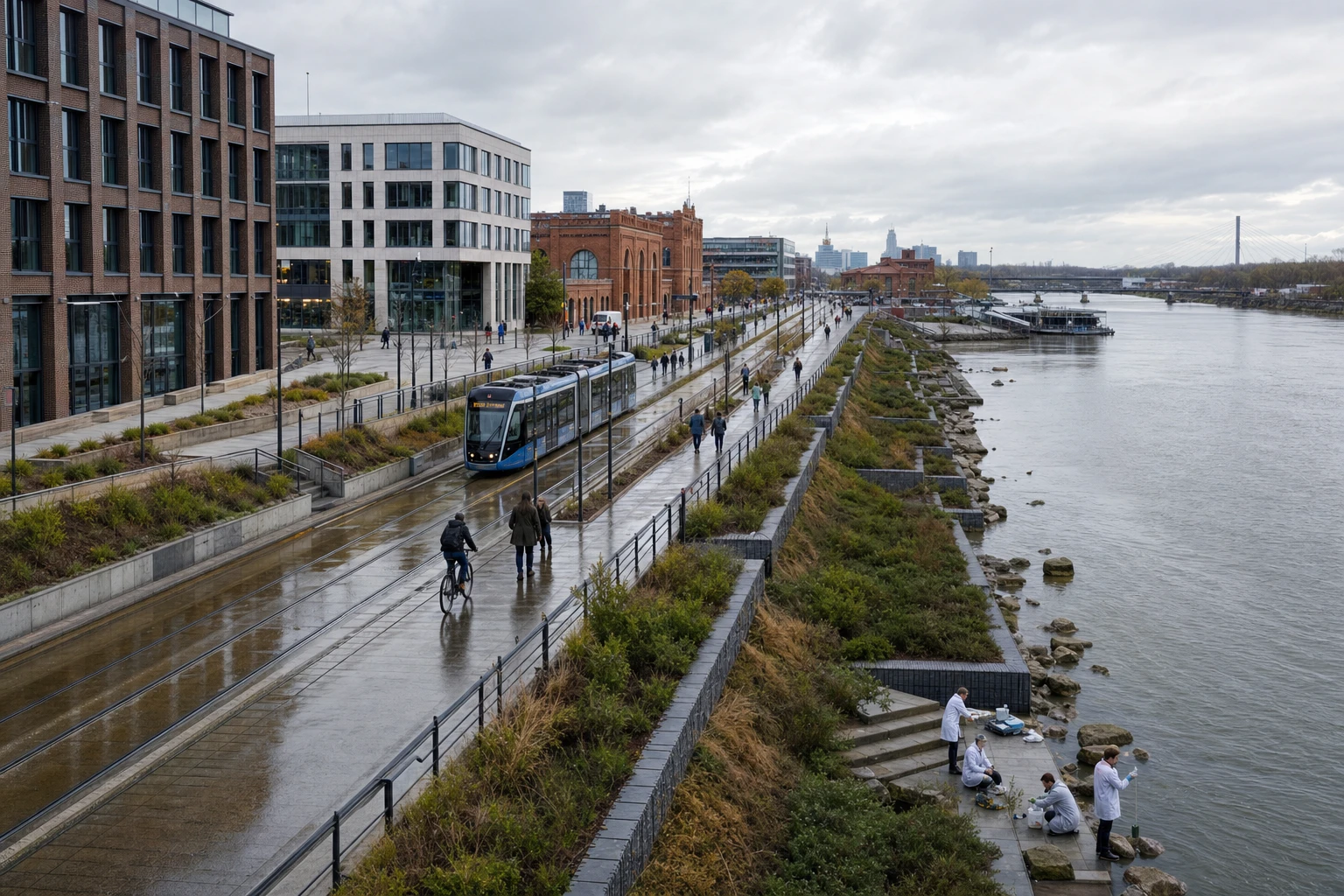
The New Vistula Academic District is not a closed enclave. Energy, water, mobility, building renewal, and river ecology operate through city networks, making the campus itself a site for education, research, and long-term resilience.
Building energy, heat recovery, stormwater, water quality, and material maintenance are tracked through auditable measures.
Walking, cycling, tram, rail, and accessible routes take priority between teaching and research sites.
Students and researchers use campus data for environmental, infrastructure, behavioral, and policy experiments.
C03 / An academic district across the day
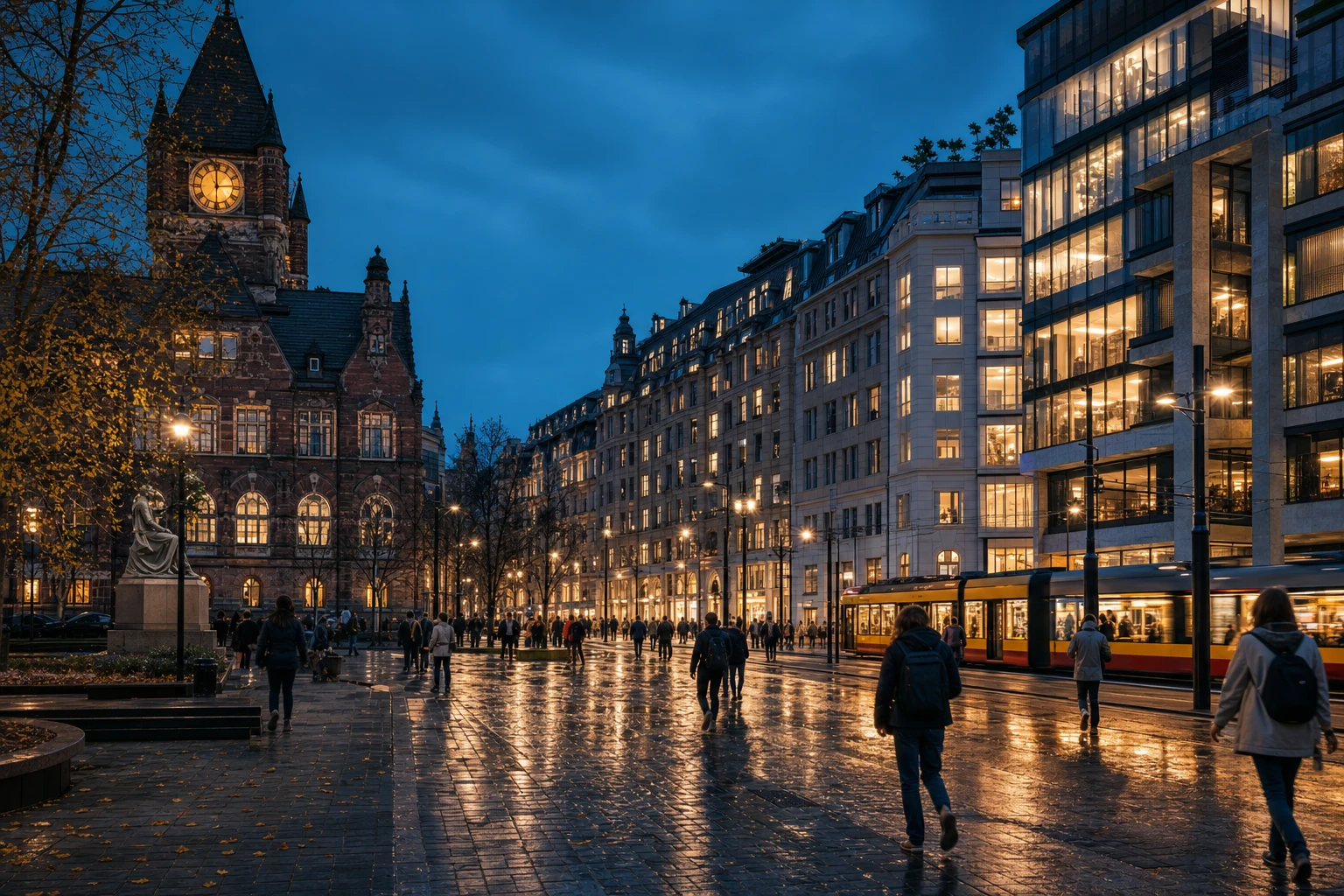
Historic halls, research towers, Student Arcades, housing, transit, and city streets form UFM together. The campus has no single boundary; safety, services, knowledge, and daily movement create a legible and open university network.
Sites connect through public streets, rail, rooftop bridges, and controlled maintenance routes.
Late study, food, safety patrols, transit information, and emergency support serve different patterns of work.
Lectures, exhibitions, performance, tours, and civic projects bring university knowledge into Warsaw’s everyday life.
Safety & access
Public teaching spaces serve students and visitors; high-energy experiments, device engineering, and maintenance tunnels use separate authorization. In an emergency, follow on-site evacuation guidance and Campus Safety notices.
VISIT / WAW
Public lectures, campus tours, and admissions consultations are available by reservation. Major events may introduce temporary crowd management across nearby blocks.