Autonomous international research university
Sustained by its Council, academic community, civic partners, and long-term research endowments.
About UFM
UFM is an autonomous international research university—and a layer of scientific infrastructure evolving with the city.
 ESTABLISHED / WARSAW / 1893
 Institutional charter
UFM is an international research university distinguished in computing, engineering, futures studies, and fundamental science. Its charter also assigns responsibility for chronospatial experimentation, localized temporal control, and civic continuity. Teaching, research, and civic duty together make UFM an integral part of Warsaw’s scientific infrastructure.
UFM / CHARTER
UFM’s autonomous charter unifies interdisciplinary education, frontier science, tiered facilities, and responsibility for civic continuity.
Sustained by its Council, academic community, civic partners, and long-term research endowments.
Teaching, research, housing, commerce, and transit share the New Vistula Academic District.
Eleven departments share curricula, real projects, research training, and public practice.
From AI, quantum physics, and planetary science to validated chronospatial engineering.
Works with Warsaw to monitor anomalies, protect critical infrastructure, and sustain urban operations.
High-risk capabilities are governed by ethics review, specialist training, independent oversight, and civic authorization.
UFM / The university in full
Five institutional dimensions explain how curricula are organized, knowledge is translated, international partnerships are built, scientific memory is preserved, and the university accepts verifiable long-term responsibility for its city. Student life, campus stewardship, and the everyday urban university now form part of the Campus section.
I01—I03 / Education & community
UFM treats education as a continuous path from rigorous disciplinary learning to responsible action in the world.
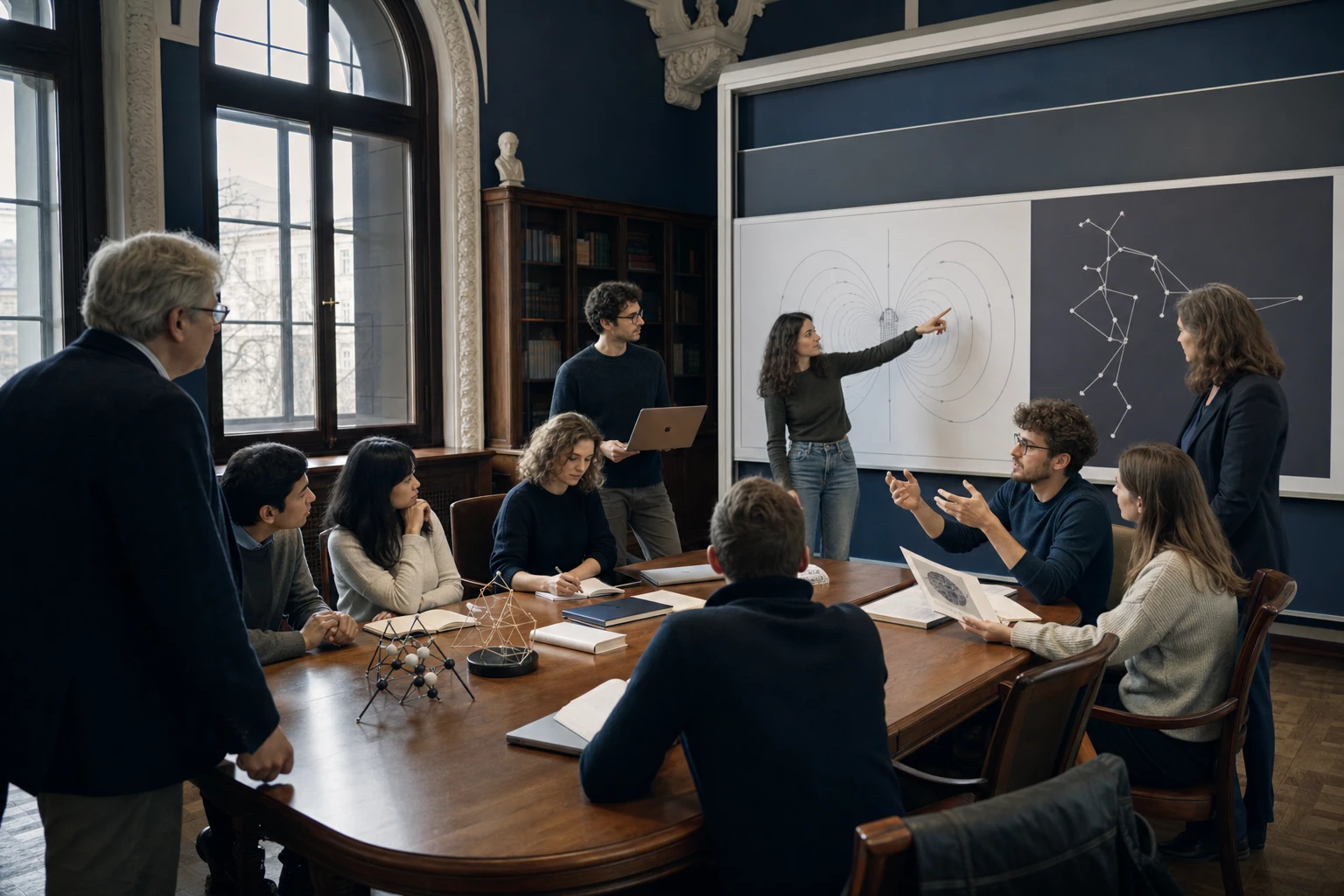
I01 / Education model
UFM’s eleven departments maintain rigorous disciplinary depth while sharing research methods, ethics, safety, and social-impact education. Students master a field and learn to understand the technical and civic systems their work will enter.
Mathematics, data literacy, research methods, academic integrity, and intercultural collaboration form a university-wide language.
Each department provides defined specialist pathways, a complete core curriculum, and corresponding experimental platforms.
Advanced study integrates knowledge through real projects, research assignments, risk assessment, and public defense.
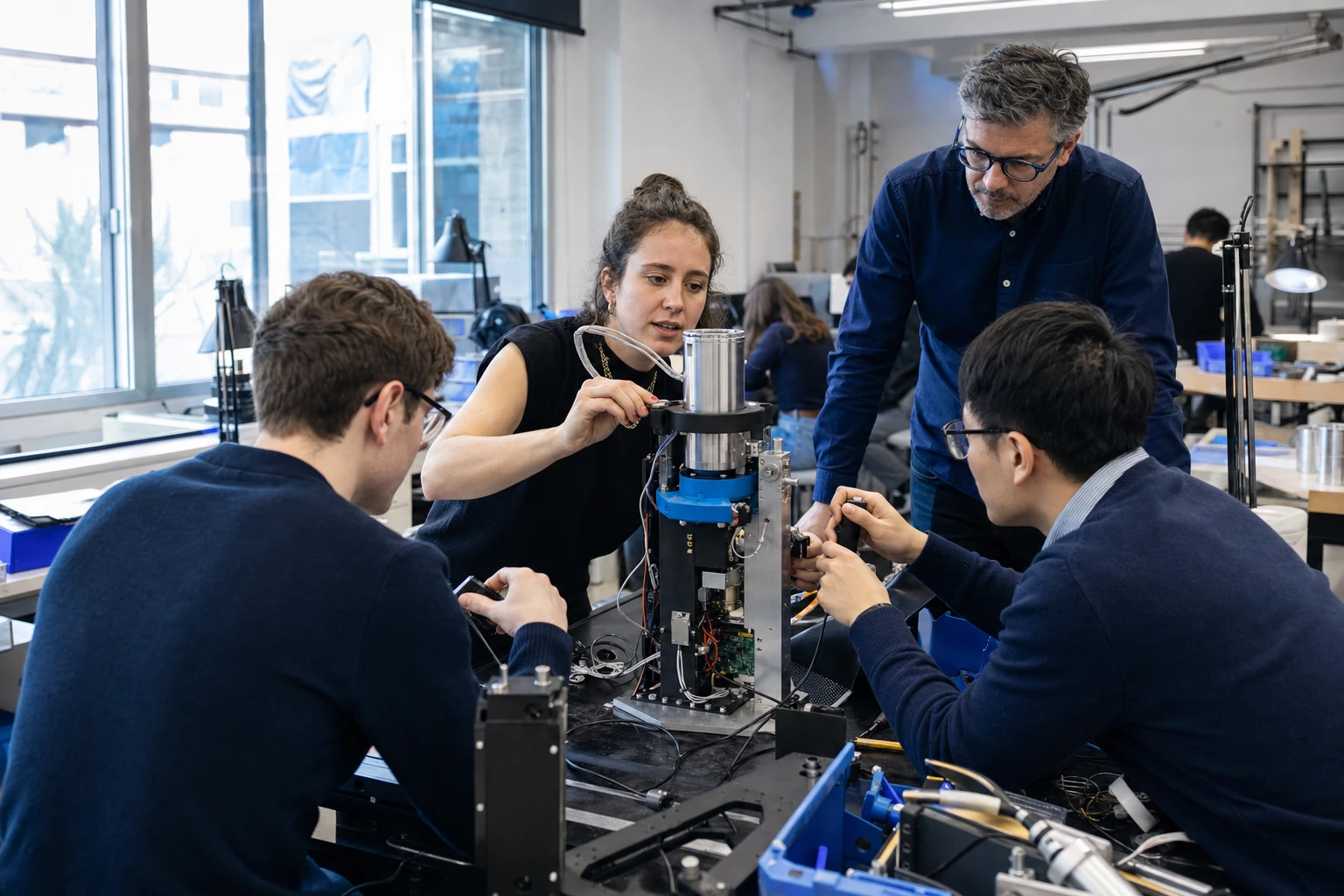
I02 / Practice & translation
From early models to controlled engineering validation, UFM requires ideas to pass reproducible experiments and human and social-context testing before entering industry, public services, or civic infrastructure.
Course teams use shared fabrication, electronics, software, data, and simulation facilities to build testable prototypes.
Every stage distinguishes concept, demonstration, prototype, validated system, and mature application.
Intellectual property, accessibility, safety, environment, and public value are assessed alongside technical performance.
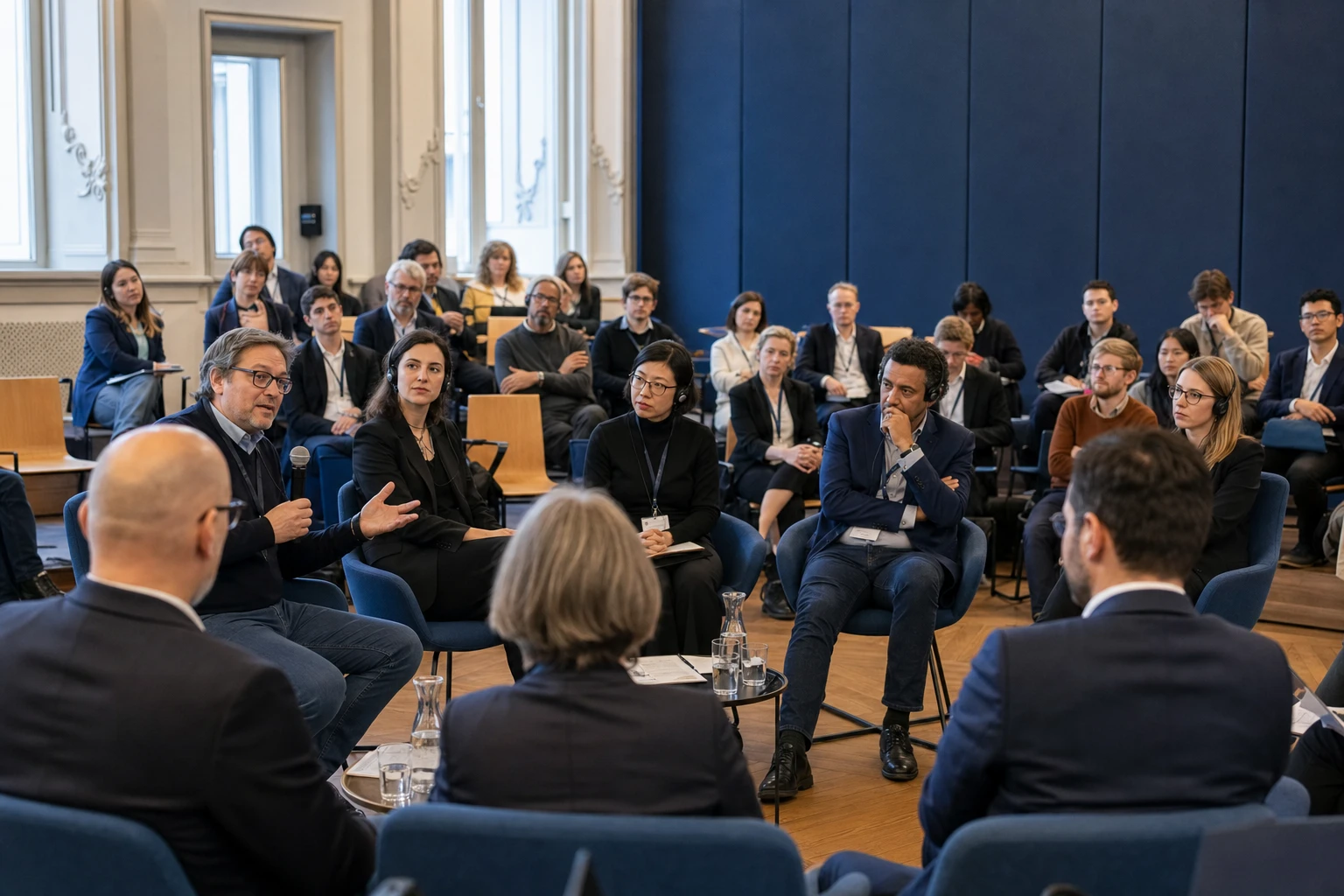
I03 / International community
Chinese, English, and Polish form UFM’s institutional language architecture. International work means more than mobility: partners frame questions together, share methods, and replicate results across laboratories.
Core policy, study entry points, and essential institutional information maintain aligned structures in all three languages.
Collaborative projects agree data standards, ethical boundaries, replication conditions, and attribution in advance.
Visiting appointments, joint seminars, student exchange, and intensive studios are organized around defined learning or research goals.
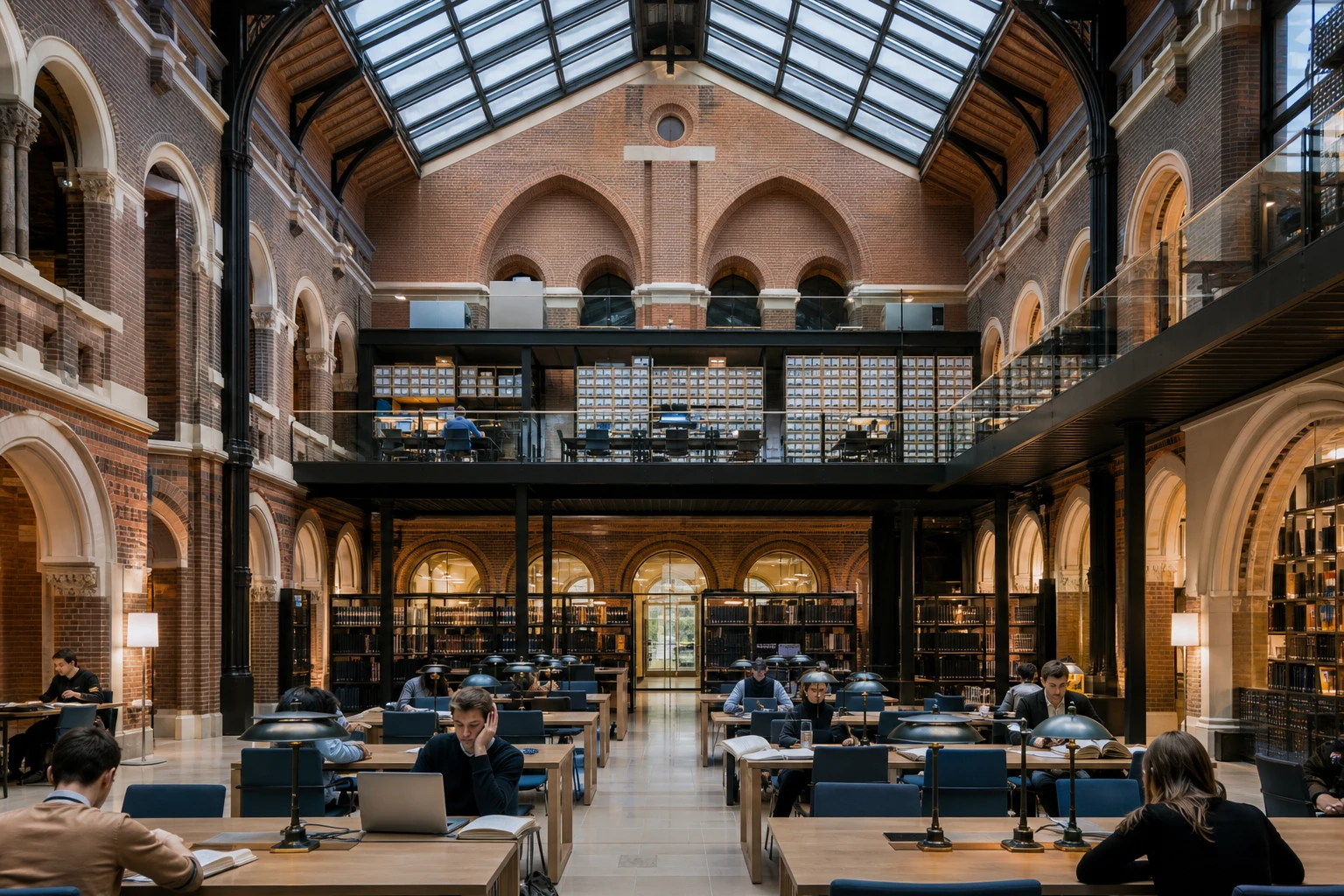
KNOWLEDGE / ARCHIVE
The central library connects physical collections, research data, civic archives, and long-horizon continuity records into a shared foundation for all eleven departments.
To educate people who can identify complex problems, design responsible solutions, and advance long-term social progress through high-quality teaching, open research, and international cooperation.
To become an international university connecting technology, the humanities, and the public good, and a major European hub for futures research, talent development, and responsible technology transfer.
UFM / 05
Evidence, method, and academic integrity.
Experimentation, collaboration, and continuous improvement.
Social, ethical, and environmental awareness.
International exchange, knowledge sharing, and inclusion.
Learning through real problems and public value.
University & city
The New Vistula Academic District connects teaching, research, student life, public transport, and civic services. UFM shares responsibility with Warsaw for science education, infrastructure resilience, and anomaly response.
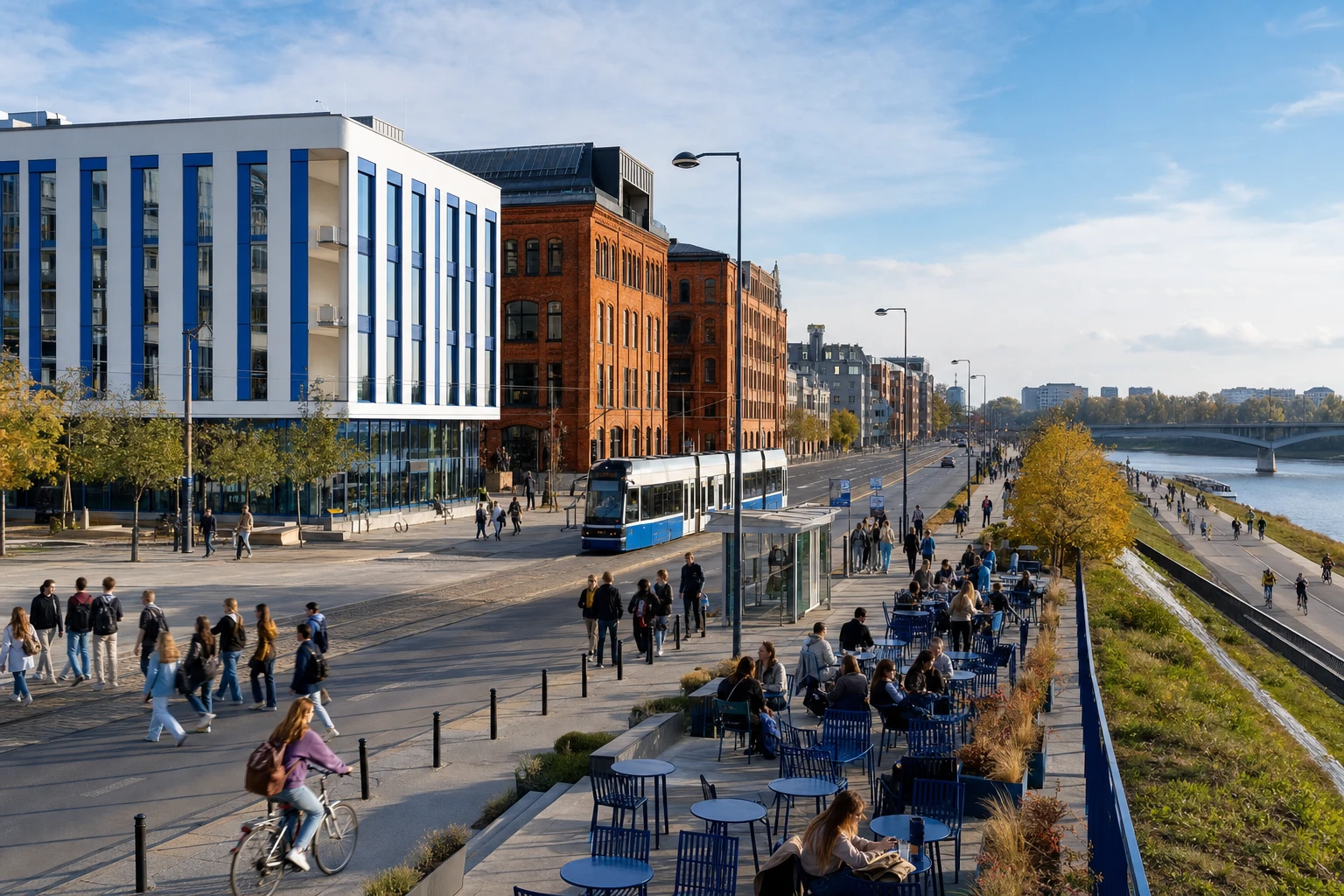
I04—I05 / City, memory & campus
From the Continuity Center to the archives, and from river ecology to energy networks, UFM governs knowledge and place through common standards of evidence, authorization, and review.
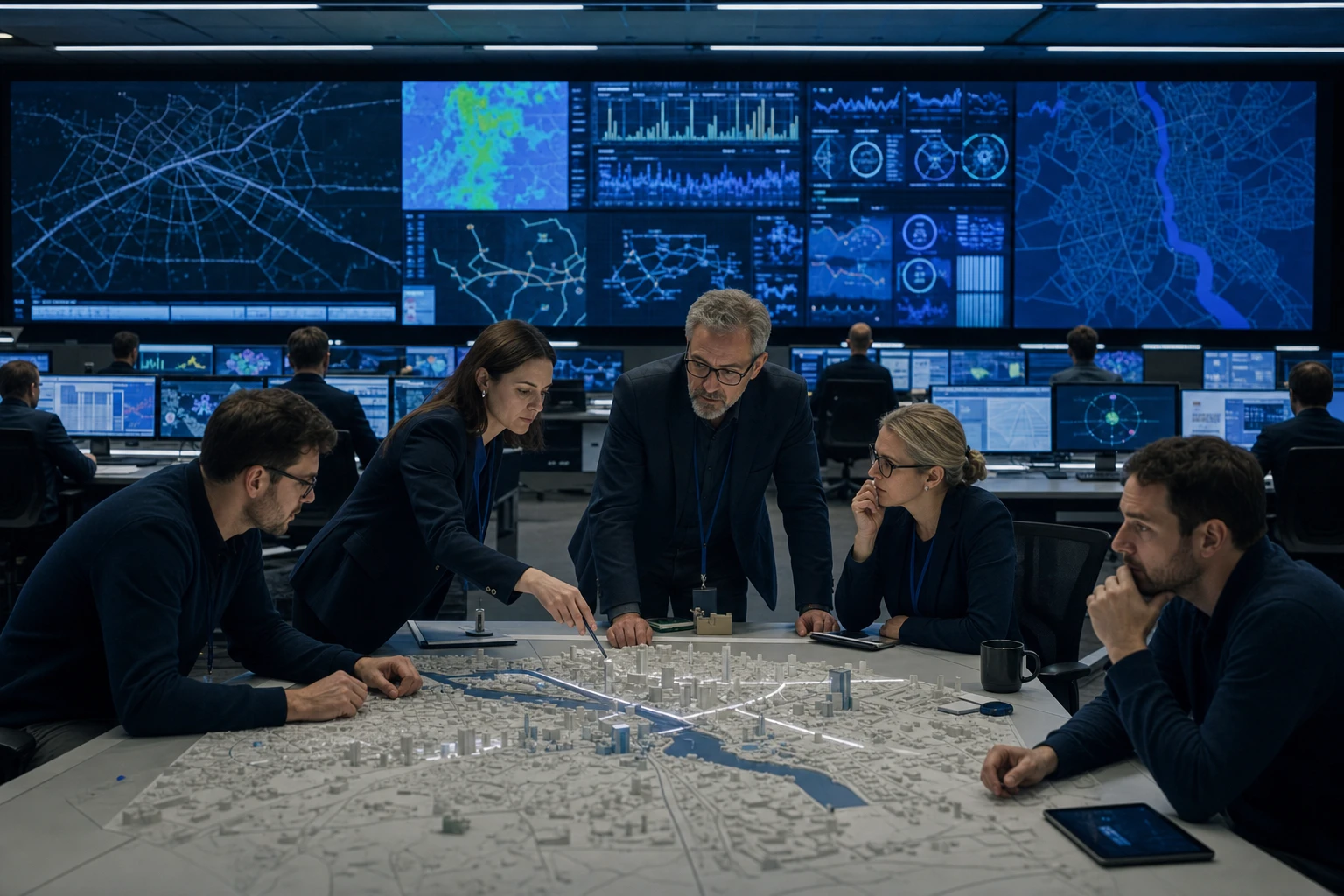
I04 / Civic continuity
The Civic Continuity Accord defines UFM’s duties in anomaly monitoring, critical-infrastructure protection, special-facility containment, and city-scale response. Specialist teams, municipal institutions, and independent oversight constrain every action.
The continuity center combines structural, transit, energy, communications, and chronospatial signals with tiered response thresholds.
High-risk facilities use two-person authorization, remote shutdown, independent power, and non-bypassable ethics holds.
The university and city run table-top and field exercises; records enter independent review and the long-term archive.
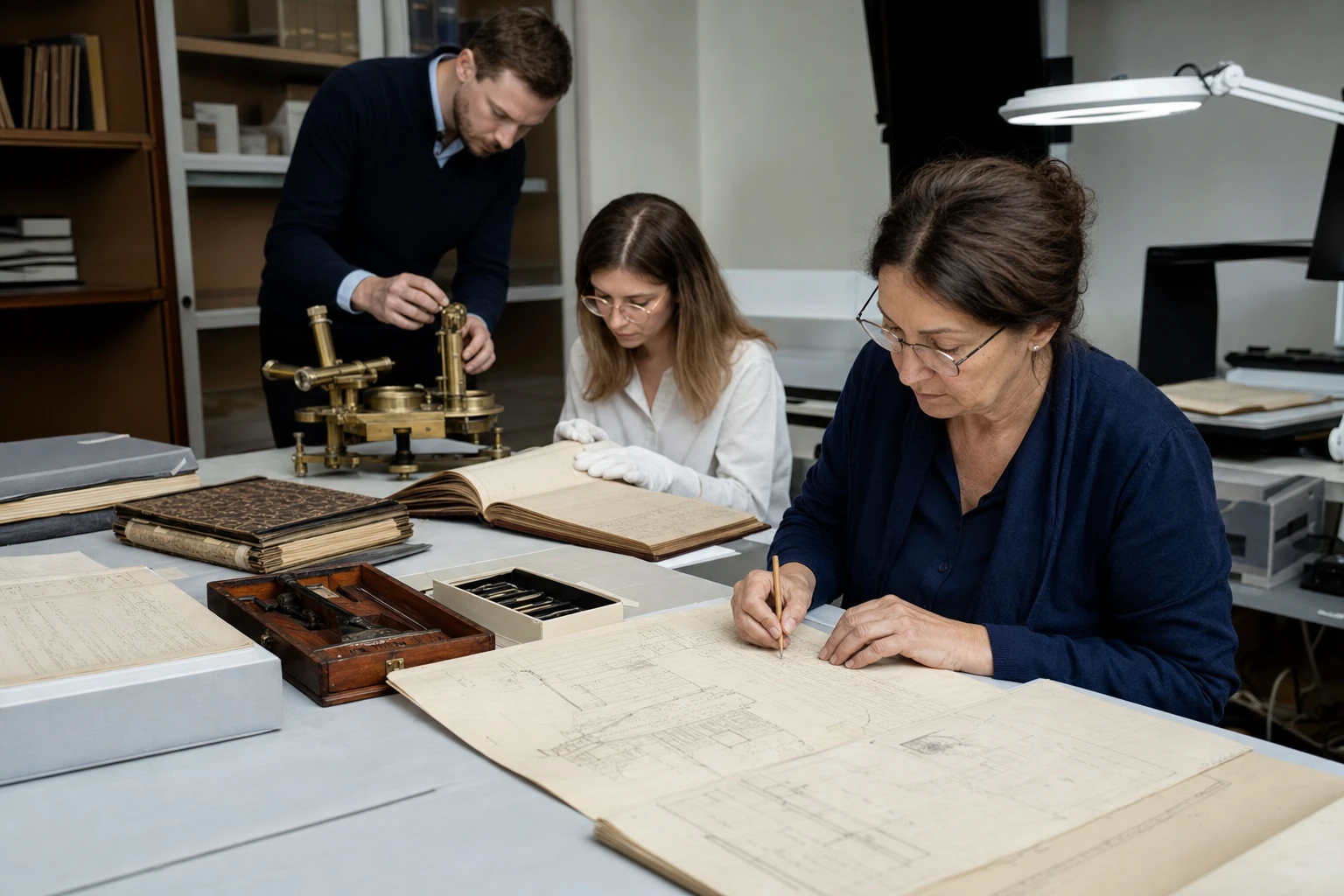
I05 / Archives & memory
University Archives preserves governance records, building documentation, curricula, research manuscripts, equipment logs, and incident reviews dating from 1893. Preservation, access, and restriction follow one records-accountability framework.
Paper, photography, instruments, and material samples are preserved through professional environments, conservation methods, and provenance records.
Research data, software, and instrument configurations retain versions, checksums, format migration, and reproducibility conditions.
Open collections, personal records, and sensitive-facility archives follow distinct copyright, privacy, ethics, and continuity permissions.
1893 —
UFM begins as an institute of applied science and public education supporting Warsaw’s industrial development.
Engineering, mathematics, physics, and urban governance form a shared academic foundation.
The rebuilt institution welcomes European researchers in relativity, quantum theory, and high-energy fields.
Siegfried establishes the field’s foundations and develops the first Chronosphere and localized Time Freeze System. Early incidents lead to the Civic Continuity Accord.
Computer science, AI, quantum physics, futures studies, and chronospatial engineering are integrated into one academic system.
UFM unifies education, frontier research, and civic-continuity responsibility under one charter, serving as a key scientific and resilience node for Warsaw.
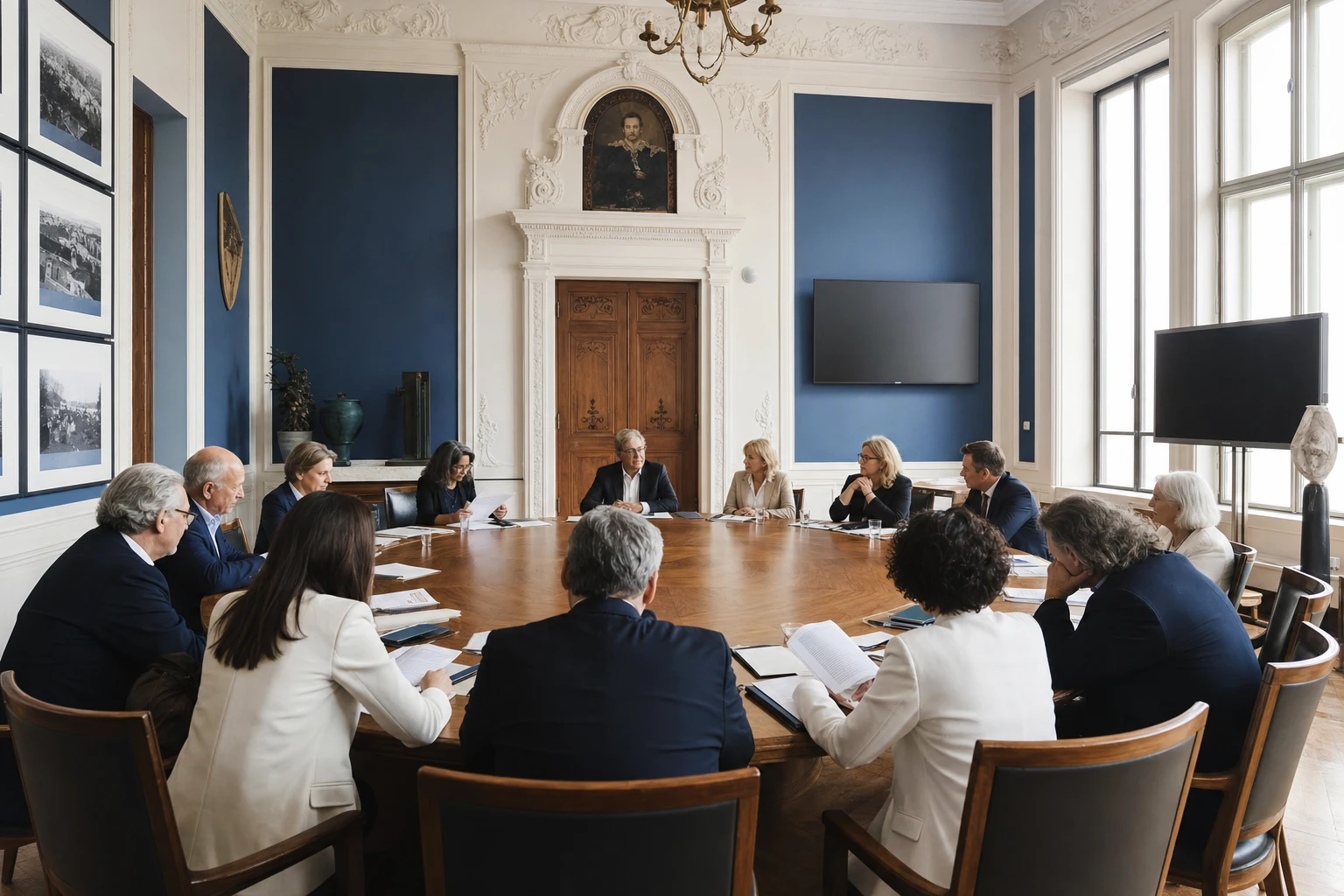
COUNCIL / SENATE
The Council provides long-horizon oversight; the Rector’s team, Academic Senate, and professional directorates turn the charter into teaching, research, and civic service.
Meet the full leadership and faculty communityCOUNCIL / SENATE / SERVICES
UFM combines Council oversight, Rector-led administration, academic self-governance, and coordinated professional services.
Oversees long-term strategy, major budgets, institutional risk, and public responsibility.
Leads the university, executes strategy, and represents it externally.
Safeguards academic standards, curriculum quality, research ethics, and faculty appointments.
Supports teaching, research, student development, and campus operations.
Oversees high-risk research, anomaly response, facility lockdowns, and inter-agency authorization.
May suspend high-risk experiments, human-subject research, or city-scale deployments.
OPERATIONS
Curriculum, quality assurance, and academic records
Research support, ethics, knowledge transfer, and partnerships
Advising, clubs, leadership, volunteering, and campus life
Careers, placements, employer partnerships, and alumni
Budget, accounting, procurement, audit, and risk
Brand, recruitment communications, media, and events
Recruitment, compensation, development, and employee services
Emergency planning, safety systems, drills, and risk
Infrastructure, learning platforms, data governance, and support
Anomaly monitoring, incident response, municipal liaison, and containment
Operation of Chronosphere, temporal-stasis systems, Atlas Yard, and deep-field facilities