 University of Future Minds UNIVERSITY OF FUTURE MINDS
 University of Future Minds · Warsaw
Build today’s knowledge for worlds that have not happened yet.
In the heart of Warsaw, UFM connects computing, engineering, futures studies, and fundamental science—educating people who can understand complex systems, carry public responsibility, and turn ideas into reality.
UFM notice Expressions of interest for research master’s and doctoral study are accepted year-round. Cycle dates and documents are confirmed in the applicant portal. View admissions →
01 / UFM
The University of Future Minds is an autonomous international research university embedded in Warsaw. It is sustained by its Council, academic community, civic partners, and long-term research endowments, with a focus on future technologies, complex systems, and urban public safety.
An urban research university
We do not predict one future. We prepare people to understand many—and shape them responsibly.
UFM has been rooted in Warsaw since 1893. Today, interdisciplinary programs, open research, rigorous engineering, and civic partnerships make real problems part of the curriculum.
Fields of study
From algorithms to planets. From public policy to spacetime continuity.
Eleven core departments share laboratories, courses, and projects. Every pathway includes research methods, ethics, safety, and social impact.
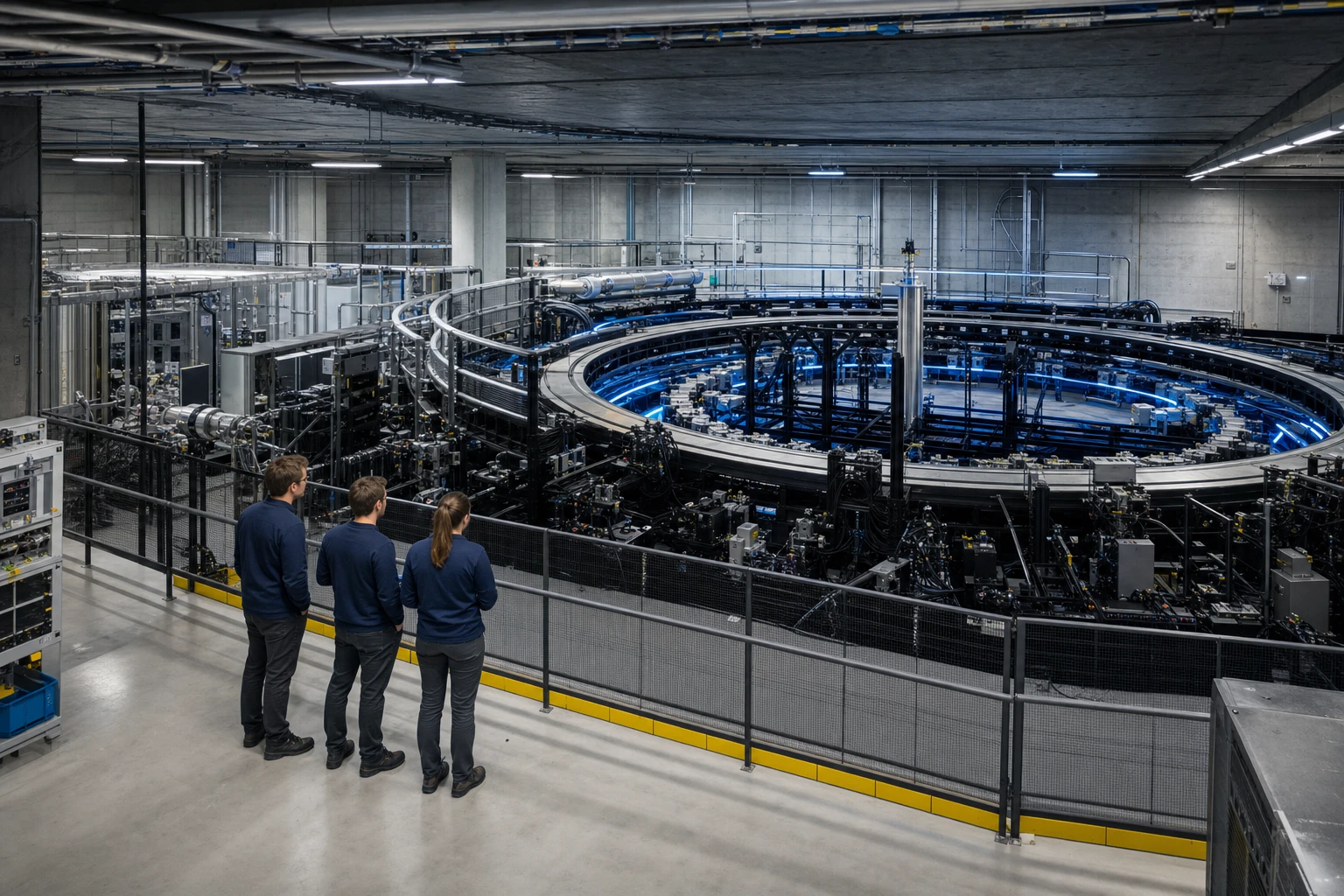 DEEP-FIELD / R09
 Research & innovation
Move good questions toward answers that can be tested.
UFM moves from fundamental research through prototypes and social validation to knowledge transfer. Every project states its evidence, maturity, and limits.
R01 Human-Centered Speech and Language Systems → R02 Safe Autonomous Systems Simulation → R03 Cognitive Innovation Laboratory → R04 Futures Scenario and Policy Lab →
View all “Any technology capable of reshaping urban space must also be governed as a public institution.”Professor Maximilian Schmidt · Founding Head of Chronospatial Science
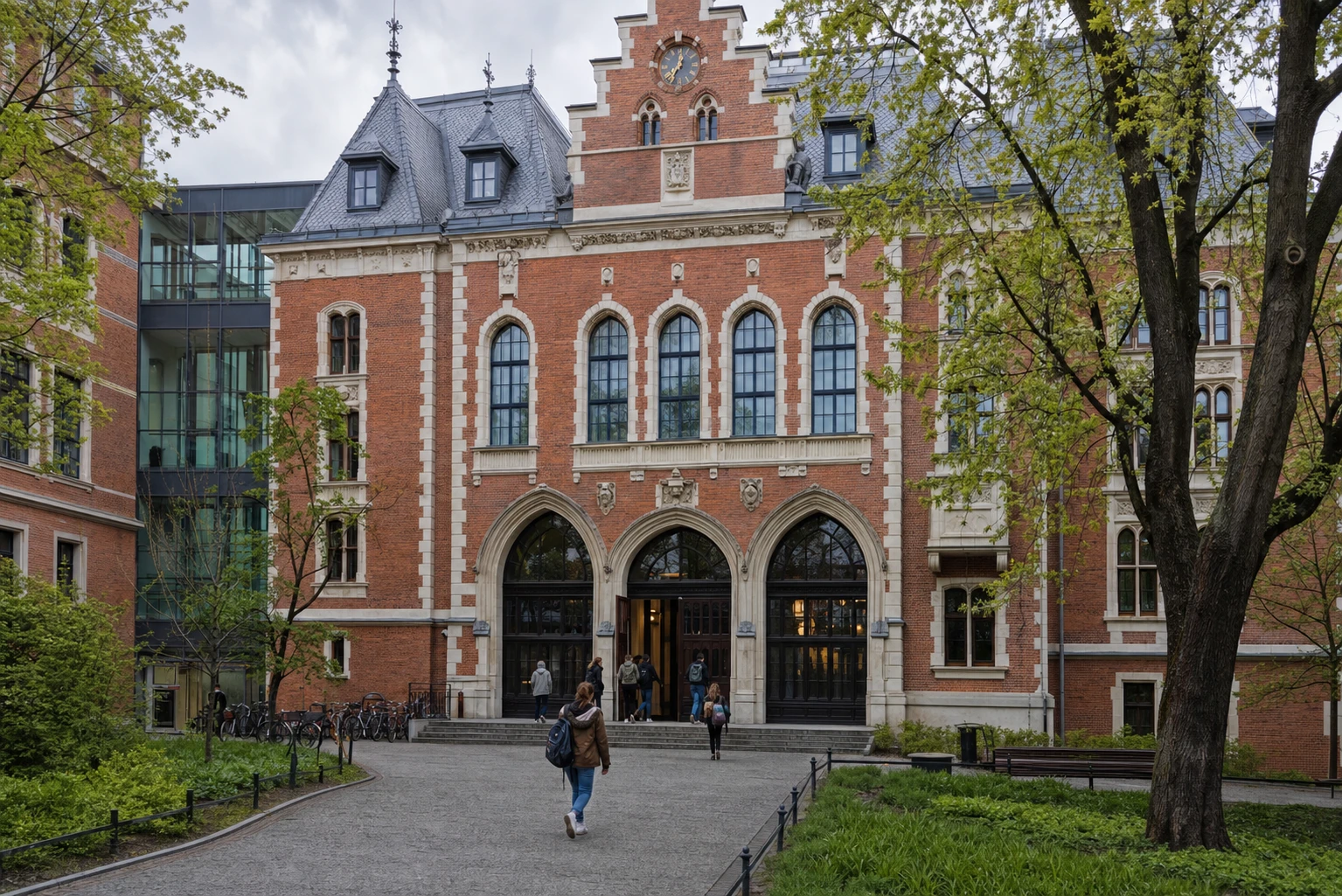
New Vistula Academic District · Warsaw
A university is not an island outside the city.
Historic halls, a modern research tower, Student Arcades, and city streets form one UFM. Transit, commerce, housing, and research meet here in everyday life.

The UFM graduate
Beyond technical ability: judgment.
Our graduates decompose complex problems, collaborate across disciplines, assess consequences, and reason over the long term under uncertainty.
- 01
Master the theories, methods, and tools of the discipline.
- 02
Decompose complex problems into researchable, designable, and testable tasks.
- 03
Communicate across disciplines and collaborate in multicultural teams.
- 04
Understand the foundations of data, AI, cybersecurity, and software systems.
- 05
Assess ethical, legal, safety, and social implications.